5 Digital Marketing Mistakes Businesses Should Avoid
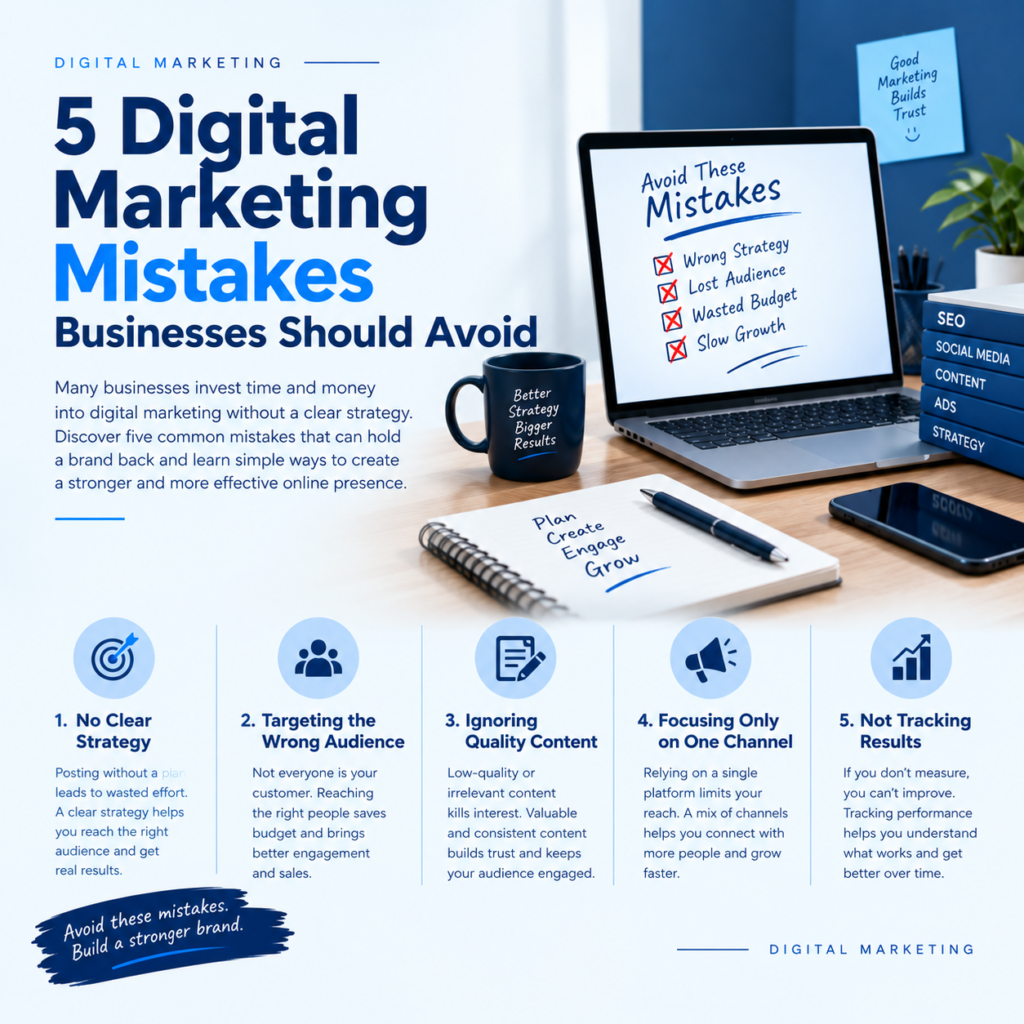
Building an online presence can give a business more ways to connect with potential customers, introduce its brand, and generate growth. However, having a social media account or spending money on advertisements does not automatically mean a marketing campaign will succeed. Small mistakes in planning, content, targeting, or measurement can quietly reduce the results of a digital marketing campaign. Recognizing these issues early can help businesses make better decisions and use their online platforms more effectively.
1. Not Knowing Your Target Audience
One common mistake is creating marketing content without clearly understanding who it is meant for. Trying to speak to everyone can make a message too general to connect with anyone in particular. Customers have different interests, needs, budgets, problems, and purchasing habits. Before planning content or starting an advertising campaign, businesses should spend some time understanding their ideal audience.
When a business understands its audience, it becomes easier to create messages that feel relevant instead of simply adding more content to the internet.
2. Focusing Only on Followers and Likes
Social media numbers can be tempting to chase. A growing follower count or a post with hundreds of likes may look like progress, but these numbers do not always translate into business results.
A company can have a large audience and still receive very few enquiries, website visits, or purchases. What matters is whether the people interacting with the brand are genuinely interested in what it offers.
Businesses can also track metrics such as:
- Website visits
- Enquiries and leads
- Engagement
- Conversion rates
- Customer retention
- Sales from marketing campaigns
The purpose of digital marketing is not simply to collect likes or increase follower numbers. Those numbers are useful only when they contribute to a larger business objective.
3. Posting Without a Clear Strategy
Publishing something every day does not necessarily mean a business has a content strategy. Random posts can make a profile look active while providing little direction to the audience. Before creating content, it is useful to decide what the post should accomplish. Content might be created to: * Teach the audience something useful * Explain a product or service * Answer common customer questions * Share experiences or stories * Introduce the people behind the business * Build familiarity with the brand.
A simple content plan can make the process much easier. Instead of deciding what to post at the last minute, businesses can prepare topics around their goals and audience. This also makes it easier to maintain consistency without producing content simply for the sake of posting.
4. Ignoring SEO and Website Experience
Social media can attract attention, but the website is often where people look for more information before contacting a business or making a purchase. A website that takes too long to load, is difficult to navigate, or does not work properly on mobile devices can create unnecessary friction for visitors. Even an interested customer may leave if finding basic information becomes difficult. Businesses should regularly review areas such as: * Page loading speed * Mobile-friendly design * Simple navigation * Helpful and relevant content * Search engine optimization * Clear calls to action * Easy-to-find contact details A good website should guide visitors naturally. They should be able to understand what the business offers, why it may be useful to them, and what action they can take next without having to hunt around the page.
5. Not Measuring and Improving Results
Another mistake is treating a campaign as finished the moment it is published. Digital marketing gives businesses access to useful performance information. This data can reveal which content receives attention, where visitors are coming from, which campaigns generate enquiries, and where people stop engaging. Checking these results regularly makes it easier to identify what deserves more attention and what may need to change. For example, a business might discover that one type of content receives strong engagement while another produces more website visits. Instead of continuing with the same approach automatically, the strategy can be adjusted based on what the data shows. Testing, measuring, learning, and making improvements should be an ongoing part of digital marketing.
Let’s Grow Your Business Online
Need help with digital marketing, content, or your online presence? Contact Muhammed Shamil today to discuss your project and take the next step toward growing your brand online.