5 Typical Digital Marketing Errors Companies Should Avoid
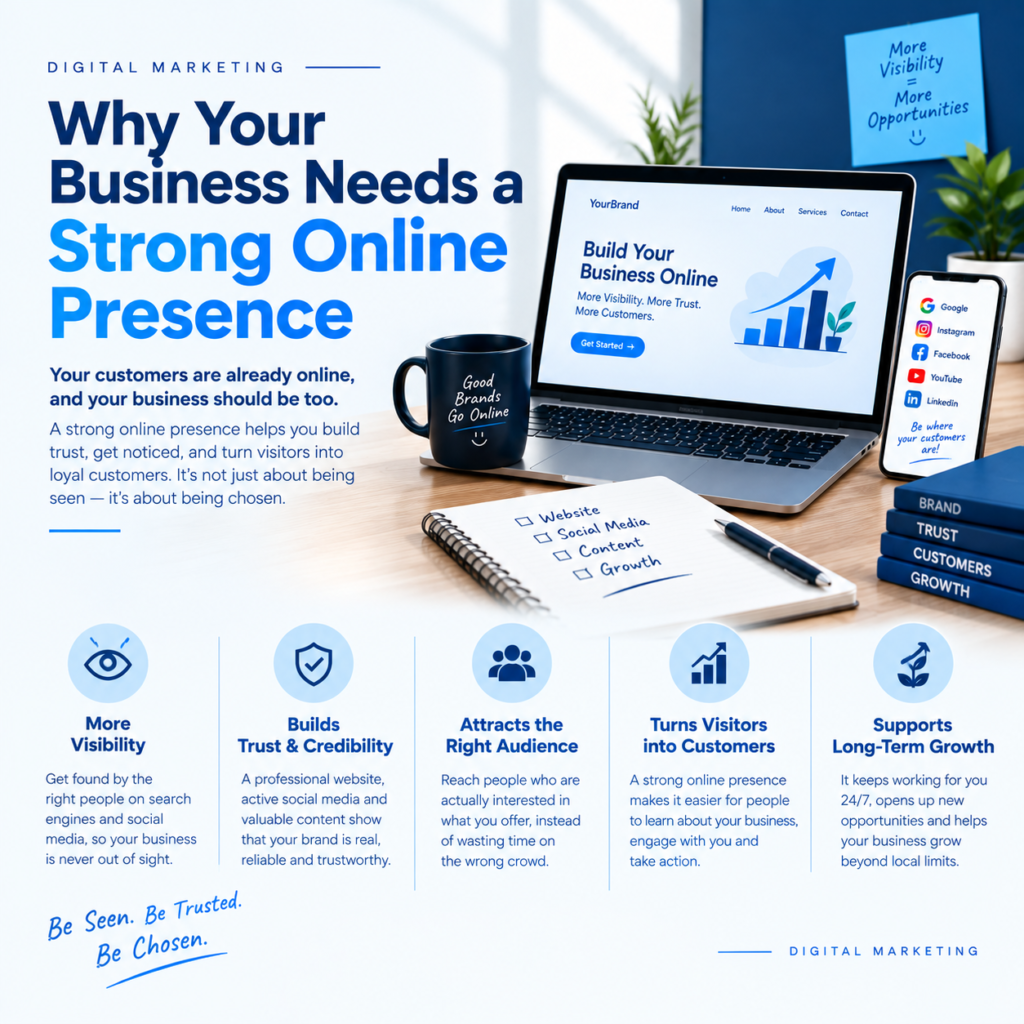
Having a presence online is no longer enough for a business. Simply posting on Instagram, creating a website, or spending money on advertisements does not automatically bring customers or sales. Effective digital marketing requires a clear understanding of people, platforms, content, and results. When these areas are overlooked, businesses can end up spending valuable time and money without seeing meaningful progress. Here are five common digital marketing mistakes businesses should watch out for.
1. Trying to Reach Everyone
Trying to Reach Everyone One of the easiest ways to make marketing less effective is to treat everyone as a potential customer. People have different interests, needs, challenges, budgets, and reasons for buying something. A message that works for one group may be completely irrelevant to another. Businesses should know exactly who they want to reach before launching a campaign or releasing material.
Among the helpful enquiries are:
- Who is most likely to require this good or service?
- What issues are they attempting to resolve?
- What social media sites do they use?
- What kind of information influences their decisions? * What spurs them on to action? Understanding these factors allows businesses to create content that feels more relevant instead of sending the same message to everyone.
2. Treating Followers and Likes as the Main Goal
A large follower count can make a social media profile look successful, but numbers alone do not tell the whole story. For example, a business might have thousands of followers but receive very few enquiries or sales. On the other hand, a smaller audience can sometimes generate stronger engagement and more valuable customers. Instead of focusing only on likes and followers, businesses should monitor metrics that connect more closely to their actual goals. These may include: * Website visitors * Enquiries and leads * Engagement rate * Conversion rate * Customer retention * Sales generated through campaigns
Marketing has more purposes than just attracting attention.The real objective is to turn relevant attention into useful outcomes for the business.
3. Creating Content Without a Plan
Publishing content just because it is time to post can quickly become repetitive and ineffective.
Without a strategy, businesses may end up posting unrelated content without knowing what each post is supposed to achieve. A better approach is to give every piece of content a specific purpose.
Depending on the business, content can be created to:
- Teach something useful
- Answer common customer questions
- Explain products or services
- Share customer experiences
- Show the people behind the brand
- Build trust and awareness
- Encourage visitors to take action
Having a basic content plan also makes consistency easier.
4. Forgetting About the Website and SEO
Social media can attract attention, but the journey should not end when someone clicks on a profile or advertisement.
A website is often where potential customers learn more about a business before deciding whether to contact or purchase from it. If the website is slow, confusing, difficult to use on mobile, or missing important information, visitors may simply leave.
Businesses should regularly consider factors such as:
- Page loading speed
- Mobile-friendly design
- Simple navigation
- Helpful and original content
- Search engine optimization
- Clear calls to action
- Easy access to contact information
A good website should answer the visitor’s basic questions quickly and make the next step obvious.
5. Running Campaigns Without Checking the Data
Launching a marketing campaign is only the beginning. One of the most useful advantages of digital marketing is the amount of information it provides about performance. Without reviewing that information, businesses may continue spending time or money on strategies that are not producing useful results. Regular analysis can reveal which content attracts attention, which campaigns generate enquiries, where visitors come from, and where potential customers stop taking action. This information can then be used to improve targeting, content, advertising budgets, website pages, and future campaigns.
Instead of being a one-time event, marketing should be viewed as a continuous process. Test a strategy, examine the outcomes, draw lessons from the experience, and improve the next iteration.
Final Thoughts
Digital marketing does not require a business to be everywhere at once. What matters more is having a clear understanding of the audience, creating content with a purpose, providing a useful online experience, and paying attention to the results.
Avoiding these common mistakes can help businesses make better use of their digital channels and build a stronger foundation for long-term growth.
The internet gives businesses plenty of opportunities, but opportunity alone does not create results. Good strategy, consistent execution, and continuous improvement are what turn an online presence into something genuinely useful.
Lorem ipsum dolor sit amet, consectetur adipiscing elit. Ut elit tellus, luctus nec ullamcorper mattis, pulvinar dapibus leo.